Shifting Player Behaviors Under Layered Cashback and Reload Structures in Niche Digital Wagering Networks
Written by Mia Perry · Nov 11, 2026

Shifting Player Behaviors Under Layered Cashback and Reload Structures in Niche Digital Wagering Networks
Layered cashback and reload structures have reshaped how participants interact with smaller digital wagering platforms since the mid-2020s, with operators offering tiered returns on losses alongside periodic deposit matches that scale according to activity volume. These mechanisms operate through multiple levels where cashback percentages increase after cumulative wagers reach defined thresholds, while reload bonuses activate on subsequent deposits within set timeframes, creating overlapping incentive cycles that encourage repeated engagement rather than one-off sessions.
Mechanics of Layered Cashback Programs
Operators in niche networks typically structure cashback across three or four tiers, starting at five percent for base activity and climbing to fifteen or twenty percent once players exceed monthly loss thresholds, with the highest tiers reserved for those maintaining consistent volume across consecutive weeks. Reload offers run parallel to these systems, delivering percentage-based matches on deposits that range from twenty-five to one hundred percent, yet often include wagering requirements that extend across both the reload amount and any associated cashback credits. Data from platform analytics indicate that players frequently adjust their deposit timing to align with reload windows, resulting in clustered activity spikes near the end of promotional periods rather than uniform distribution throughout the month.
Observed Adjustments in Deposit and Wager Patterns
Research tracking user logs across several regional networks shows that participants shift toward smaller, more frequent deposits when reload structures reset weekly, whereas cashback tiers tied to monthly totals prompt larger single deposits near cycle starts to accelerate tier progression. One analysis covering platforms active through 2025 revealed a twenty-two percent rise in mid-week deposit events coinciding with reload activations, while weekend wagering volumes remained relatively stable. Those monitoring these networks note that players also demonstrate greater selectivity in game choice, favoring titles with higher return-to-player rates once they approach cashback thresholds in order to maximize recoverable amounts before tier resets occur.
Retention Effects Across Niche Ecosystems
Smaller digital wagering environments, often focused on specific sports markets or regional game variants, report extended session durations when layered incentives overlap, because participants continue play to satisfy remaining wagering requirements attached to recent reloads. Figures from industry monitoring groups indicate that average account lifespan on platforms employing dual cashback-reload systems extended by fourteen percent between early 2025 and November 2026 compared with networks using single-layer promotions. Yet this extension accompanies increased variance in individual spend, with some accounts showing rapid escalation followed by abrupt pauses once cashback credits are issued and players reassess accumulated losses.
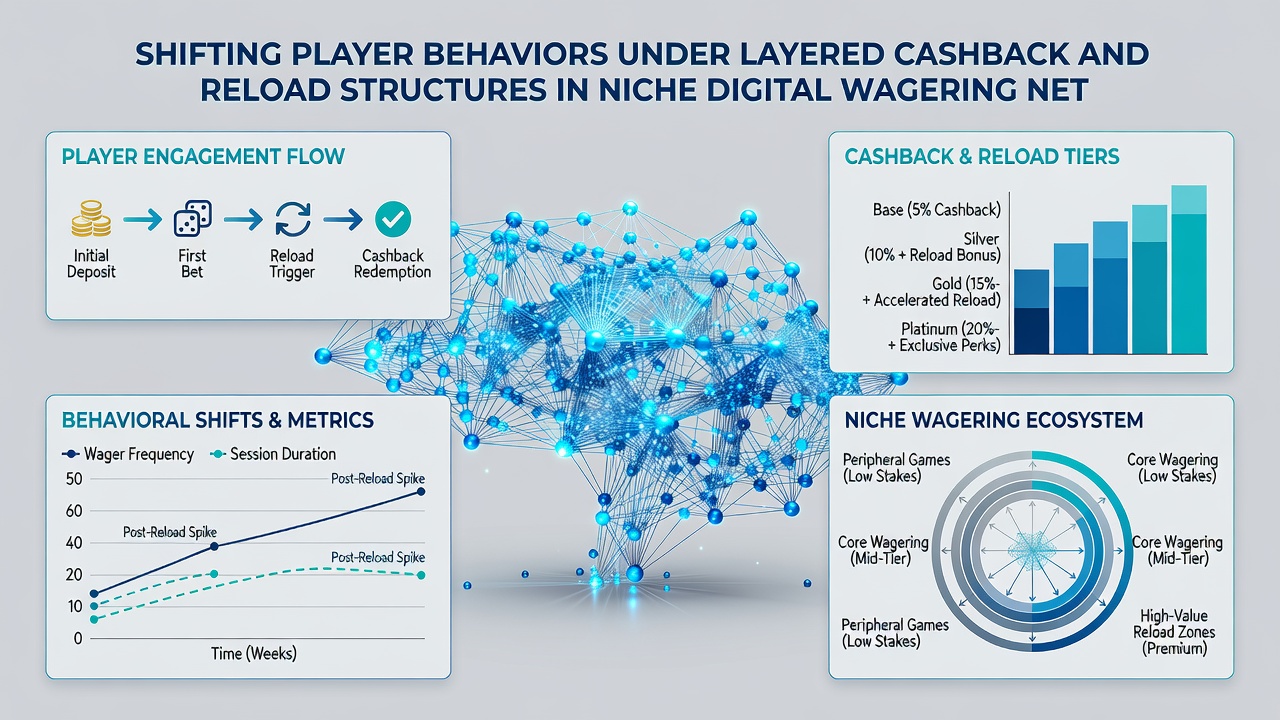
Observers tracking cross-platform movement find that users migrate between niche operators when one network's tier thresholds become harder to reach, seeking environments where lower-volume tiers still deliver meaningful cashback percentages. A report issued by the Alcohol and Gaming Commission of Ontario documented similar migration patterns among participants in provincially regulated markets, noting that reload frequency influenced the speed of these shifts more than cashback percentages alone. Meanwhile, data compiled by the International Gaming Institute at the University of Nevada, Las Vegas highlighted how reload structures tied to loyalty status further segment player cohorts, with higher-status accounts displaying steadier deposit rhythms while lower-tier users exhibited pronounced peaks around promotional resets.
Seasonal and Regional Variations Emerging by Late 2026
Through November 2026, networks operating in markets with pronounced seasonal sports calendars recorded amplified effects from layered structures during major tournament periods, as reload offers aligned with high-viewership windows drew additional deposits that then fed into cashback calculations. Platforms serving narrower geographic audiences observed that players in regions with stricter deposit limits adapted by spreading activity across multiple accounts, a behavior that operators counter through unified tracking systems linking reload eligibility to verified identities. Evidence from aggregated transaction datasets suggests these adaptations maintain overall platform revenue stability even as individual behavior fragments across more accounts and shorter active periods.
Future Trajectories for Incentive Design
Operators continue refining tier boundaries and reload intervals based on observed response curves, with several networks testing dynamic adjustments that lower cashback percentages for players showing rapid deposit growth while preserving higher rates for steadier patterns. Such modifications aim to moderate the clustering effect documented in earlier cycles without eliminating the engagement lift that layered structures provide. Those analyzing these developments expect continued experimentation through 2027 as platforms balance retention gains against regulatory scrutiny of promotional complexity.
Conclusion
Layered cashback and reload structures have produced measurable changes in how participants time deposits, select games, and move between niche platforms, with patterns evolving in response to overlapping incentive cycles and regional constraints. Continued monitoring of transaction data through late 2026 and beyond will clarify whether these shifts stabilize into predictable rhythms or prompt further adjustments in how operators configure their promotional layers.