The Hidden Calculations Behind Tiered Reward Structures in Digital Wagering Platforms
Written by Greta Günther · Aug 24, 2026
The Hidden Calculations Behind Tiered Reward Structures in Digital Wagering Platforms
Digital wagering platforms rely on tiered reward structures that segment players into levels based on detailed mathematical models, and these systems determine how points accumulate, when multipliers activate, and what thresholds trigger upgrades. Observers note that operators calculate customer lifetime value using historical betting patterns, deposit frequency, and average session duration, while algorithms adjust rewards to balance retention against house edge margins. Data from industry reports shows these calculations often incorporate expected value formulas that project long-term player contributions before any tier benefits get assigned.
Core Mathematical Models in Tier Design
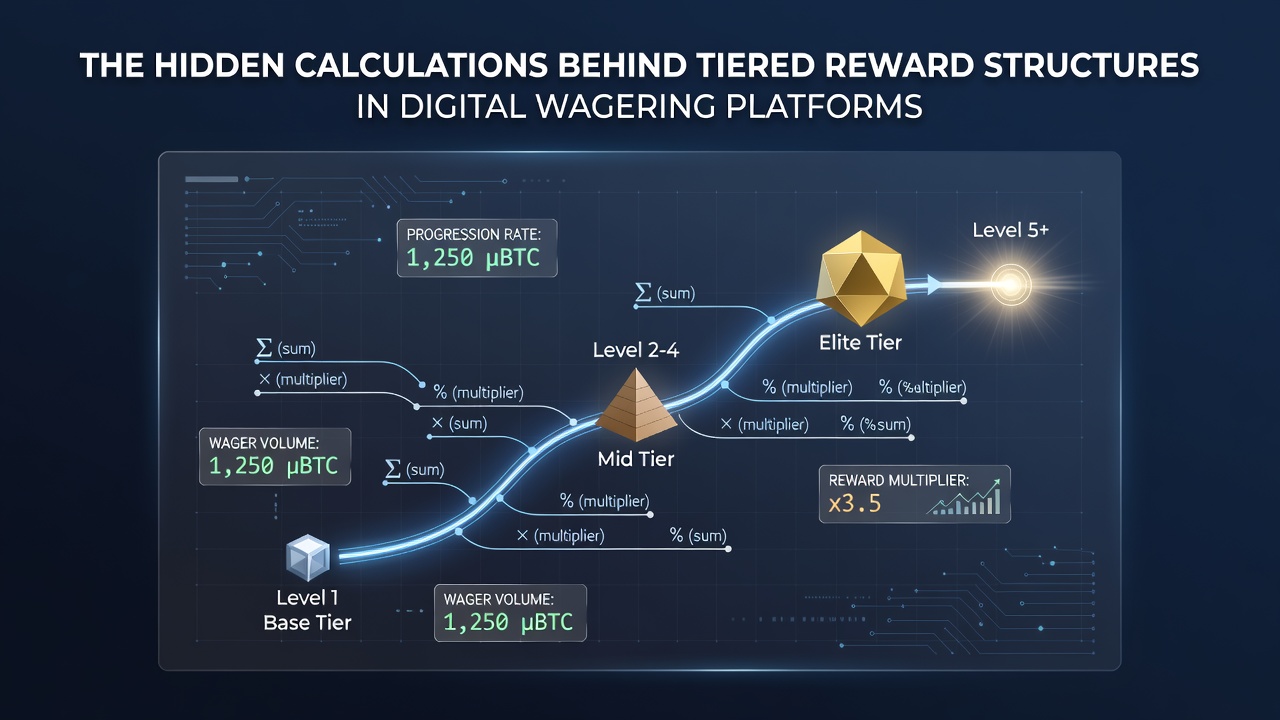
Researchers at various institutions have documented how platforms build tier thresholds around metrics like theoretical loss, which equals total wagers multiplied by the house edge percentage, and this figure feeds directly into loyalty point allocations. A common approach multiplies a player's theoretical loss by a fixed rate to generate points, then applies escalating multipliers at higher tiers, yet the exact rates remain proprietary because they tie into revenue projections. One study from a North American research group revealed that operators run simulations across thousands of player profiles to test tier boundaries, ensuring that promotion costs stay below projected revenue gains over six to twelve month periods.
Platforms further refine these models with churn prediction scores derived from logistic regression techniques, where variables such as declining deposit amounts or longer gaps between sessions increase the likelihood of tier demotion unless countered by targeted bonuses. In August 2026, updates from the Nevada Gaming Control Board highlighted new requirements for transparency in how these predictive scores influence reward distribution, prompting several operators to publish simplified explanations of their point conversion rates.
Player Segmentation and Behavioral Data Integration
Segmentation relies on clustering algorithms that group users by metrics including wager volatility, game preference, and response rates to previous promotions, and these clusters determine which tier progression paths appear most cost-effective for the platform. Analysts apply decision trees and random forest models to identify patterns where certain player types reach higher tiers faster, allowing operators to set differentiated entry requirements across segments. Figures from the Australian Communications and Media Authority indicate that such data-driven segmentation has led to measurable shifts in reward allocation, with high-volatility players often receiving accelerated point earnings to maintain engagement levels.
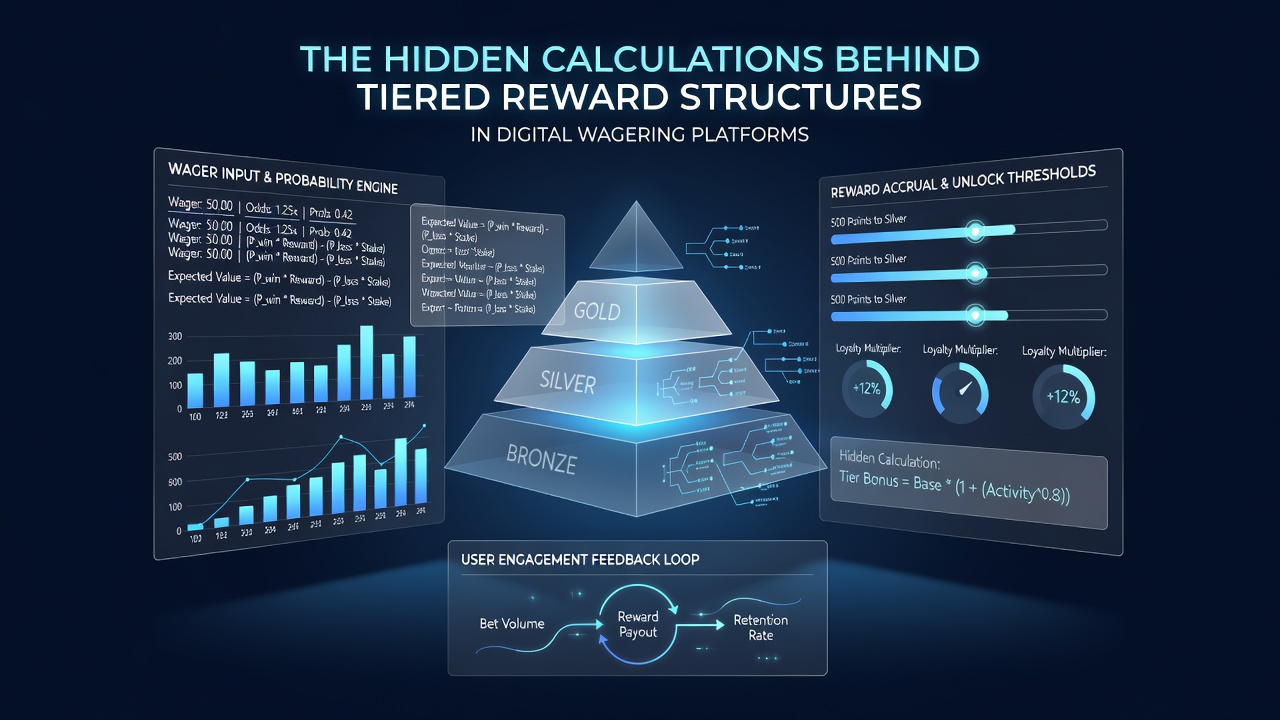
Behavioral economics principles also enter the calculations through loss aversion adjustments, where reward structures emphasize recovery bonuses after losing streaks to reduce attrition rates. Platforms track these interventions using A/B testing frameworks that compare control groups against those receiving tier-specific incentives, and the results feed back into the underlying models to refine future thresholds. Observers point out that this iterative process keeps the hidden calculations responsive to changing player habits without altering the visible tier names or visual progress bars.
Regulatory Oversight and Compliance Factors
Regulatory bodies across regions impose constraints on how these calculations operate, particularly around fairness in point redemption values and disclosure of qualifying criteria. The Gaming Policy and Enforcement Branch in British Columbia requires operators to maintain auditable records of tier advancement algorithms, ensuring that random number generator outcomes do not indirectly influence loyalty point awards. Similar standards from the Malta Gaming Authority emphasize that reward multipliers must remain consistent across all eligible players within a given tier, preventing selective application based on undisclosed internal scores.
Operators address these requirements by embedding compliance checks into their calculation engines, where automated audits flag any tier adjustments that deviate from documented formulas. Industry associations such as the European Gaming and Betting Association have compiled guidelines that encourage standardized reporting of average reward payout percentages relative to theoretical loss, and these reports help regulators verify that hidden calculations do not exceed acceptable promotional cost ratios.
Technical Implementation and Real-Time Adjustments
Real-time adjustments occur through machine learning pipelines that update tier probabilities based on live data streams, including current session length and recent win-loss ratios. These systems recalculate a player's projected tier trajectory every few minutes during active play, then surface personalized progress indicators that encourage continued engagement. Software frameworks used by major platforms integrate these pipelines with existing random number generators and financial ledgers, creating a unified environment where reward decisions align with both player behavior forecasts and revenue targets.
Case examples from platform documentation illustrate how a player crossing a mid-tier threshold might trigger an automatic multiplier increase calculated as a percentage of their recent theoretical loss, and this increase gets prorated across remaining qualification periods. Such mechanics rely on database queries that pull aggregated statistics across millions of transactions while maintaining sub-second response times for user interfaces.
Conclusion
Tiered reward structures in digital wagering platforms rest on interconnected calculations that combine theoretical loss projections, predictive analytics, and regulatory compliance layers, and these elements together shape how players advance through levels. Reports from sources including the Nevada Gaming Control Board and academic reviews continue to shed light on the underlying formulas without exposing proprietary code, while operators maintain systems that balance retention incentives against operational margins. As data collection methods advance, the precision of these hidden calculations is expected to increase, influencing tier designs across global markets.